Base MCP
Teaching AI agents to speak the Base Design System

Ali Asghar Aamir
Design Engineer
12 Aug 2026

Introduction
Base MCP is an internal tool built around one idea: design systems should be machine-readable. It's available today to Uber engineers and designers. This is early. Our thinking on the problem is still evolving. But the core direction is clear: your AI agent should know Base.
Since launch, Base MCP has ranked in the top 1% of MCPs at the company, with 500+ users and 50,000+ total tool calls.
Uber Design System
Base is Uber's design system. It gives our design and engineering teams a shared language: the tokens, components, icons, and guidelines that power every product we ship at scale.
With AI becoming central to how we build, design systems are no longer just resources for humans to reference. They're the knowledge layer that determines whether AI-assisted work stays consistent with our standards or drifts away from them.
AI agents don't know Base
Building with Base means working across multiple sources of information: documentation on one platform, tokens in a package registry, icons in a design tool, component implementations in platform-specific monorepos. For a human engineer or designer, this is navigable with practice. For an AI agent, it's a black box.
An engineer asking their agent to help migrate legacy code to Base gets hardcoded hex values. The agent has no idea what tokens exist. A designer vibe-coding a prototype burns through attempts trying to get the right Base patterns. The agent is guessing. An engineer implementing a design from Figma builds the wrong component. A design systems lead trying to understand adoption across products is doing it by hand.
These aren't edge cases. They're the everyday reality of trying to use an AI agent to work with a design system it has no access to.
What is Base MCP?
Base MCP is Uber's implementation: a remote server that connects AI agents directly to the Base Design System. The moment you connect it, your AI agent knows Base:
- 280 documentation pages from base.uber.com covering components, accessibility, patterns, and usage guidelines.
- 700+ design tokens spanning color, typography, spacing, and motion, with Primitive and Semantic tiers and Light/Dark mode variants, from our npm package.
- 3,200+ icons in filled and outlined variants, searchable by keyword, from our npm package.
- Pointers into our platform-specific monorepos, so your agent can locate and reuse existing Base components instead of building from scratch.
When your agent is building or writing with Base connected, it doesn't guess. It queries. It gets the right answer.
The benefits of Base MCP
Since launch, Base MCP has been used for:
- Answering Base questions. "What tone should this cancellation message use?" "What VoiceOver label belongs on an icon-only button?" "Should I use left or leading in this label?" These are answerable in seconds. The agent responds with Base's own guidance, not a generic answer.
- Building new UI from scratch. When an engineer or designer starts a new component, their AI agent can pull the right tokens, icons, and component patterns without guessing. The output aligns with Base from the first line, before design review catches issues.
- Migrating existing code to Base. Legacy code accumulates across every platform-specific monorepo at Uber: hardcoded hex values, custom icon SVGs, non-Base component patterns. Manual migration at that scale doesn't hold up. An AI agent with Base MCP can identify those violations and suggest the correct Base equivalent, working through the codebase token by token, making large-scale migration manageable.
- QAing engineer implementations against designs. A designer or QA engineer can ask "does this implementation use the right tokens for this surface?" or "is this the correct icon for this context?" Base MCP gives the agent the vocabulary to check implementation against spec, closing the loop between what was designed and what shipped.
- Tracking Base adoption. Because Base MCP exposes the full token and icon surface, it creates a foundation for asking analytical questions: what's in use, what's drifted, what's still on legacy patterns. Adoption reporting becomes something an agent can assist with, rather than something tracked manually. Connected to Base MCP, your agent isn't improvising. It's citing sources.
How it's built
Base MCP is a remote server, deployed once, available to all Uber engineers and designers. There's nothing to install locally, no API keys to manage, no configuration to maintain.
Under the hood, three data layers run continuously:
- Documentation layer: The full Base documentation, indexed for fast retrieval
- Token layer: Design tokens from the system, cached and queryable by name, collection, or mode
- Icon layer: All Base icons, searchable by keyword and filterable by variant

Figure 1: Base MCP architecture showing an internally hosted MCP connecting remote Base resources to icon, color, and documentation tools used by an LLM agent.
Avoiding Staleness
Base ships updates regularly: new tokens, new icons, updated documentation. Base MCP automatically references the updated packages. No action required from users.
Stale design system data fails quietly. An AI working from an outdated token set suggests the right approach for a version of Base that no longer exists. Base MCP always reflects the latest release, so engineers implement designs with current Base information, not an outdated version.
What's next
Base MCP is an information layer: it gives AI assistants access to Base knowledge. But knowing the right answer is different from taking the right action.
The next step we're exploring is a Base design plugin, a layer of purpose-built skills that adds behavior on top of that knowledge. Where the MCP tells your AI what Base says, a skill acts on it, generating a component, running a design check, walking a migration step by step.
We're currently building and evaluating these skills, exploring both CLI and MCP-based approaches to find the right balance of capability and efficiency.
This is the direction we're heading. Still early, but moving.
Acknowledgments
Special thanks to Christian Rauh for his direction, leadership, and continued support throughout this initiative, and to Joann Wu and Charlie Waite for their executive sponsorship and encouragement.
Thanks also to Alejandro Sanchez, Bernadette Faller, Brandon Triplett, Dale Fairbourne, Diana Suvorova, Hunter Bryant, Ian Guisard, Israel Marban, Jenny Morrice, Stefan Giangiuliani, and Vietanh Nguyen for their reviews, feedback, and for championing this initiative across the company.
Cover photo attribution: Image created by Alfonso Perez.
More of our work

Inspire what’s next
How design can shape the roadmap before it's written
View work


From Pencil to Prompt
Making AI our everyday language
View work

Design Specs, Reimagined
How Uber Built an Agentic System to Automate Design Specs in Minutes
View work
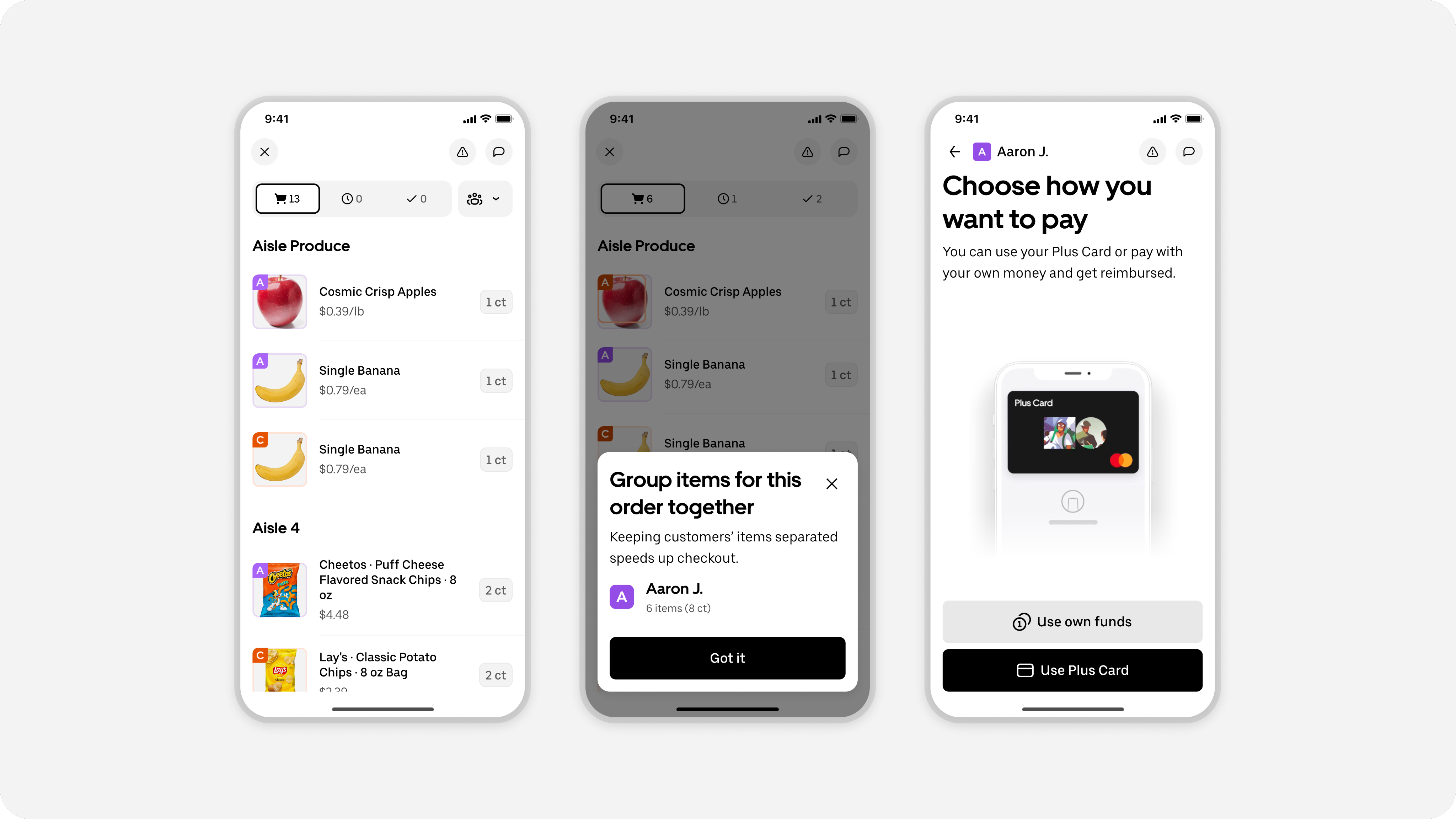
Designing batched shopping orders
Redesigning shopping trips to enable a batched experience for earners
View work
When to evolve a design system
Rebuilding Uber’s icon language
View work
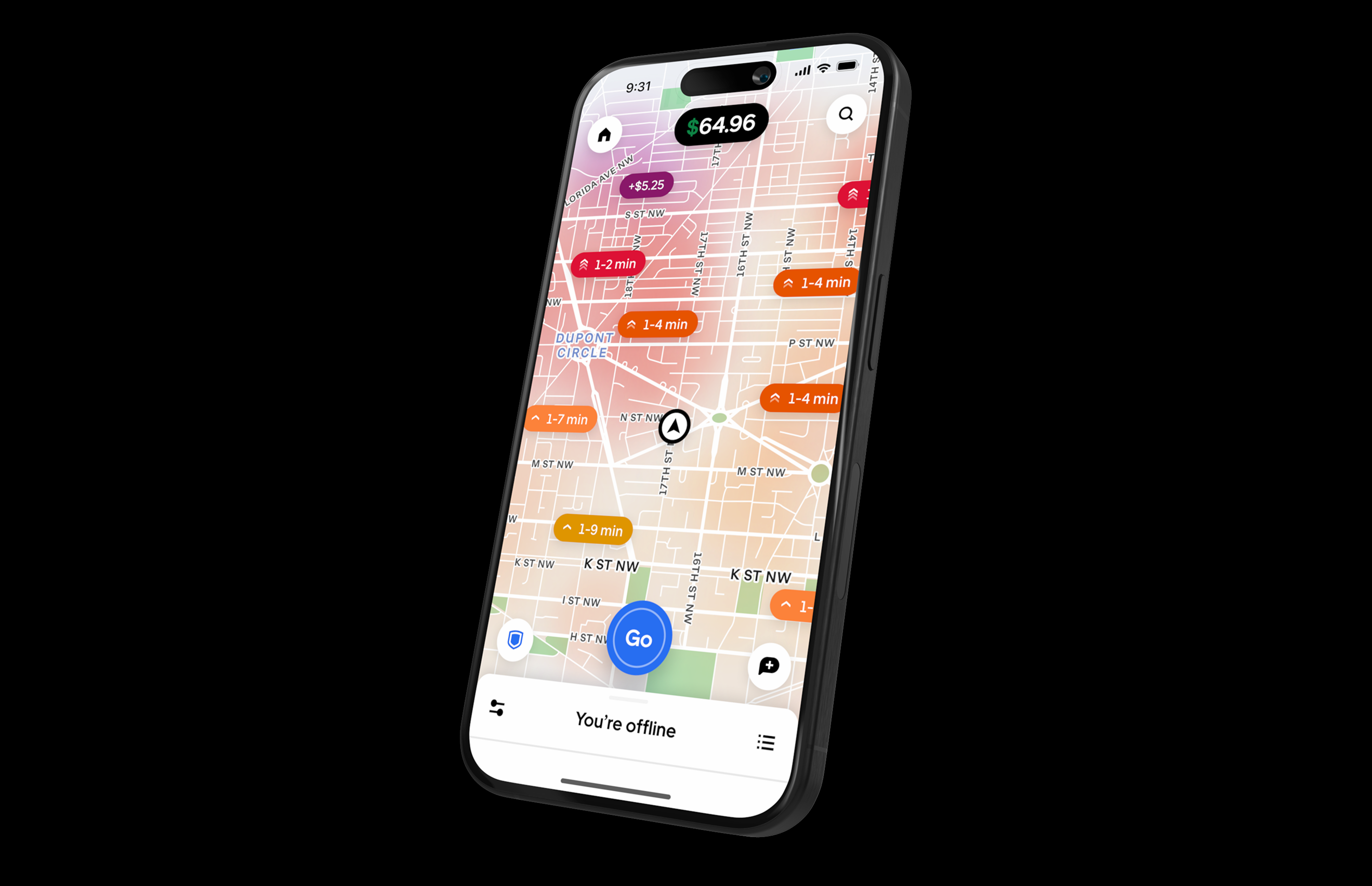
Elevating the earner experience
A new visual language for our heatmap
View work
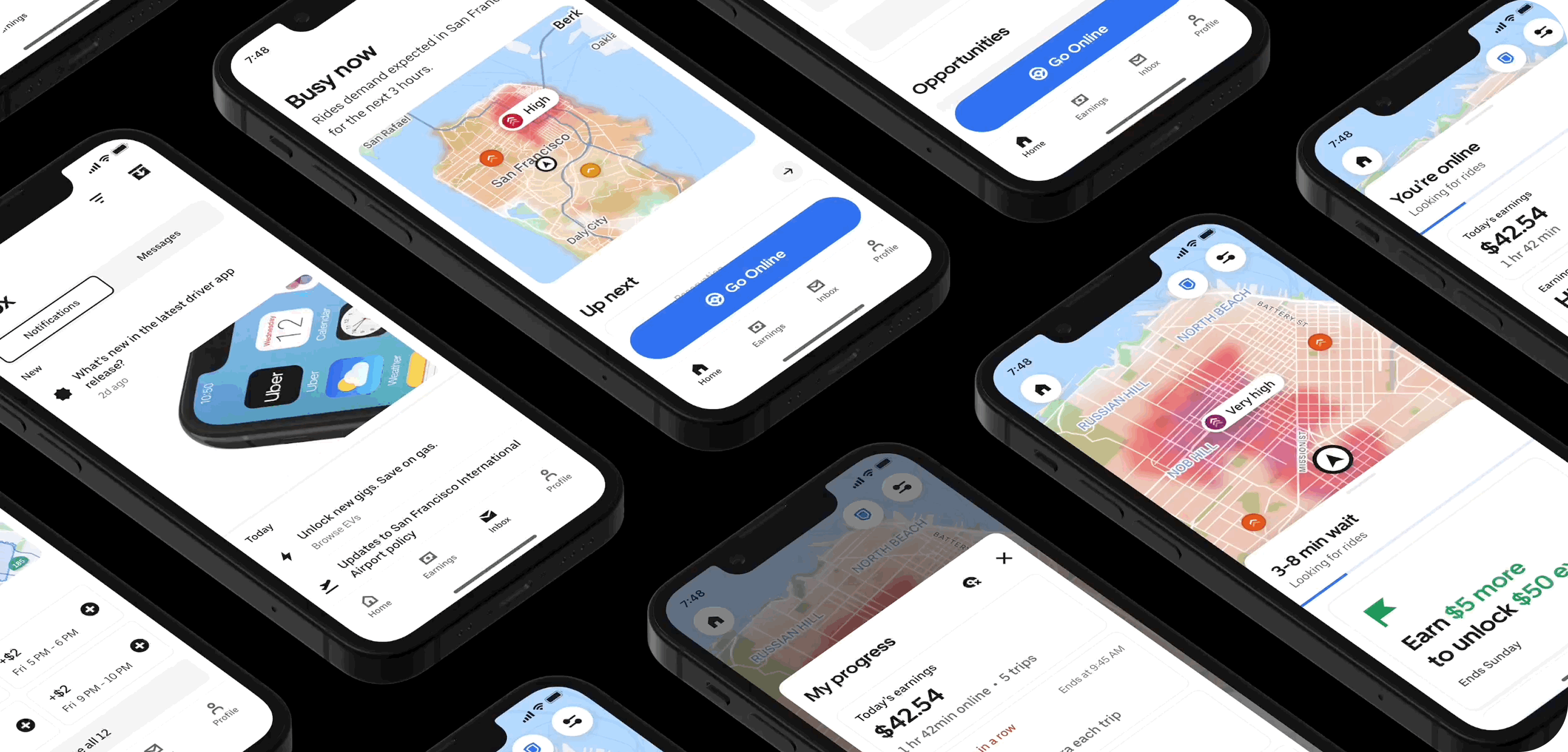
Reimagining the driver experience
How a design-led initiative brought focus, clarity, and confidence back to the Driver app
View work
Designing for smart food photography
Real-time feedback that brings clarity, confidence, and quality to user photos
View work
Uber Design
2026 © Uber Technologies Inc.


Base MCP
Teaching AI agents to speak the Base Design System
Ali Asghar Aamir
Design Engineer
12 Aug 2026
Introduction
Base MCP is an internal tool built around one idea: design systems should be machine-readable. It's available today to Uber engineers and designers. This is early. Our thinking on the problem is still evolving. But the core direction is clear: your AI agent should know Base.
Since launch, Base MCP has ranked in the top 1% of MCPs at the company, with 500+ users and 50,000+ total tool calls.
Uber Design System
Base is Uber's design system. It gives our design and engineering teams a shared language: the tokens, components, icons, and guidelines that power every product we ship at scale.
With AI becoming central to how we build, design systems are no longer just resources for humans to reference. They're the knowledge layer that determines whether AI-assisted work stays consistent with our standards or drifts away from them.
AI agents don't know Base
Building with Base means working across multiple sources of information: documentation on one platform, tokens in a package registry, icons in a design tool, component implementations in platform-specific monorepos. For a human engineer or designer, this is navigable with practice. For an AI agent, it's a black box.
An engineer asking their agent to help migrate legacy code to Base gets hardcoded hex values. The agent has no idea what tokens exist. A designer vibe-coding a prototype burns through attempts trying to get the right Base patterns. The agent is guessing. An engineer implementing a design from Figma builds the wrong component. A design systems lead trying to understand adoption across products is doing it by hand.
These aren't edge cases. They're the everyday reality of trying to use an AI agent to work with a design system it has no access to.
What is Base MCP?
Base MCP is Uber's implementation: a remote server that connects AI agents directly to the Base Design System. The moment you connect it, your AI agent knows Base:
- 280 documentation pages from base.uber.com covering components, accessibility, patterns, and usage guidelines.
- 700+ design tokens spanning color, typography, spacing, and motion, with Primitive and Semantic tiers and Light/Dark mode variants, from our npm package.
- 3,200+ icons in filled and outlined variants, searchable by keyword, from our npm package.
- Pointers into our platform-specific monorepos, so your agent can locate and reuse existing Base components instead of building from scratch.
When your agent is building or writing with Base connected, it doesn't guess. It queries. It gets the right answer.
The benefits of Base MCP
Since launch, Base MCP has been used for:
- Answering Base questions. "What tone should this cancellation message use?" "What VoiceOver label belongs on an icon-only button?" "Should I use left or leading in this label?" These are answerable in seconds. The agent responds with Base's own guidance, not a generic answer.
- Building new UI from scratch. When an engineer or designer starts a new component, their AI agent can pull the right tokens, icons, and component patterns without guessing. The output aligns with Base from the first line, before design review catches issues.
- Migrating existing code to Base. Legacy code accumulates across every platform-specific monorepo at Uber: hardcoded hex values, custom icon SVGs, non-Base component patterns. Manual migration at that scale doesn't hold up. An AI agent with Base MCP can identify those violations and suggest the correct Base equivalent, working through the codebase token by token, making large-scale migration manageable.
- QAing engineer implementations against designs. A designer or QA engineer can ask "does this implementation use the right tokens for this surface?" or "is this the correct icon for this context?" Base MCP gives the agent the vocabulary to check implementation against spec, closing the loop between what was designed and what shipped.
- Tracking Base adoption. Because Base MCP exposes the full token and icon surface, it creates a foundation for asking analytical questions: what's in use, what's drifted, what's still on legacy patterns. Adoption reporting becomes something an agent can assist with, rather than something tracked manually. Connected to Base MCP, your agent isn't improvising. It's citing sources.
How it's built
Base MCP is a remote server, deployed once, available to all Uber engineers and designers. There's nothing to install locally, no API keys to manage, no configuration to maintain.
Under the hood, three data layers run continuously:
- Documentation layer: The full Base documentation, indexed for fast retrieval
- Token layer: Design tokens from the system, cached and queryable by name, collection, or mode
- Icon layer: All Base icons, searchable by keyword and filterable by variant
Figure 1: Base MCP architecture showing an internally hosted MCP connecting remote Base resources to icon, color, and documentation tools used by an LLM agent.
Avoiding Staleness
Base ships updates regularly: new tokens, new icons, updated documentation. Base MCP automatically references the updated packages. No action required from users.
Stale design system data fails quietly. An AI working from an outdated token set suggests the right approach for a version of Base that no longer exists. Base MCP always reflects the latest release, so engineers implement designs with current Base information, not an outdated version.
What's next
Base MCP is an information layer: it gives AI assistants access to Base knowledge. But knowing the right answer is different from taking the right action.
The next step we're exploring is a Base design plugin, a layer of purpose-built skills that adds behavior on top of that knowledge. Where the MCP tells your AI what Base says, a skill acts on it, generating a component, running a design check, walking a migration step by step.
We're currently building and evaluating these skills, exploring both CLI and MCP-based approaches to find the right balance of capability and efficiency.
This is the direction we're heading. Still early, but moving.
Acknowledgments
Special thanks to Christian Rauh for his direction, leadership, and continued support throughout this initiative, and to Joann Wu and Charlie Waite for their executive sponsorship and encouragement.
Thanks also to Alejandro Sanchez, Bernadette Faller, Brandon Triplett, Dale Fairbourne, Diana Suvorova, Hunter Bryant, Ian Guisard, Israel Marban, Jenny Morrice, Stefan Giangiuliani, and Vietanh Nguyen for their reviews, feedback, and for championing this initiative across the company.
Cover photo attribution: Image created by Alfonso Perez.
More of our work
Inspire what’s next
How design can shape the roadmap before it's written
View work
From Pencil to Prompt
Making AI our everyday language
View work
Design Specs, Reimagined
How Uber Built an Agentic System to Automate Design Specs in Minutes
View work
Designing batched shopping orders
Redesigning shopping trips to enable a batched experience for earners
View work
When to evolve a design system
Rebuilding Uber’s icon language
View work
Elevating the earner experience
A new visual language for our heatmap
View work
Reimagining the driver experience
How a design-led initiative brought focus, clarity, and confidence back to the Driver app
View work
Designing for smart food photography
Real-time feedback that brings clarity, confidence, and quality to user photos
View work
Uber Design
2026 © Uber Technologies Inc.
Base MCP
Teaching AI agents to speak the Base Design System
Ali Asghar Aamir
Design Engineer
12 Aug 2026
Introduction
Base MCP is an internal tool built around one idea: design systems should be machine-readable. It's available today to Uber engineers and designers. This is early. Our thinking on the problem is still evolving. But the core direction is clear: your AI agent should know Base.
Since launch, Base MCP has ranked in the top 1% of MCPs at the company, with 500+ users and 50,000+ total tool calls.
Uber Design System
Base is Uber's design system. It gives our design and engineering teams a shared language: the tokens, components, icons, and guidelines that power every product we ship at scale.
With AI becoming central to how we build, design systems are no longer just resources for humans to reference. They're the knowledge layer that determines whether AI-assisted work stays consistent with our standards or drifts away from them.
AI agents don't know Base
Building with Base means working across multiple sources of information: documentation on one platform, tokens in a package registry, icons in a design tool, component implementations in platform-specific monorepos. For a human engineer or designer, this is navigable with practice. For an AI agent, it's a black box.
An engineer asking their agent to help migrate legacy code to Base gets hardcoded hex values. The agent has no idea what tokens exist. A designer vibe-coding a prototype burns through attempts trying to get the right Base patterns. The agent is guessing. An engineer implementing a design from Figma builds the wrong component. A design systems lead trying to understand adoption across products is doing it by hand.
These aren't edge cases. They're the everyday reality of trying to use an AI agent to work with a design system it has no access to.
What is Base MCP?
Base MCP is Uber's implementation: a remote server that connects AI agents directly to the Base Design System. The moment you connect it, your AI agent knows Base:
- 280 documentation pages from base.uber.com covering components, accessibility, patterns, and usage guidelines.
- 700+ design tokens spanning color, typography, spacing, and motion, with Primitive and Semantic tiers and Light/Dark mode variants, from our npm package.
- 3,200+ icons in filled and outlined variants, searchable by keyword, from our npm package.
- Pointers into our platform-specific monorepos, so your agent can locate and reuse existing Base components instead of building from scratch.
When your agent is building or writing with Base connected, it doesn't guess. It queries. It gets the right answer.
The benefits of Base MCP
Since launch, Base MCP has been used for:
- Answering Base questions. "What tone should this cancellation message use?" "What VoiceOver label belongs on an icon-only button?" "Should I use left or leading in this label?" These are answerable in seconds. The agent responds with Base's own guidance, not a generic answer.
- Building new UI from scratch. When an engineer or designer starts a new component, their AI agent can pull the right tokens, icons, and component patterns without guessing. The output aligns with Base from the first line, before design review catches issues.
- Migrating existing code to Base. Legacy code accumulates across every platform-specific monorepo at Uber: hardcoded hex values, custom icon SVGs, non-Base component patterns. Manual migration at that scale doesn't hold up. An AI agent with Base MCP can identify those violations and suggest the correct Base equivalent, working through the codebase token by token, making large-scale migration manageable.
- QAing engineer implementations against designs. A designer or QA engineer can ask "does this implementation use the right tokens for this surface?" or "is this the correct icon for this context?" Base MCP gives the agent the vocabulary to check implementation against spec, closing the loop between what was designed and what shipped.
- Tracking Base adoption. Because Base MCP exposes the full token and icon surface, it creates a foundation for asking analytical questions: what's in use, what's drifted, what's still on legacy patterns. Adoption reporting becomes something an agent can assist with, rather than something tracked manually. Connected to Base MCP, your agent isn't improvising. It's citing sources.
How it's built
Base MCP is a remote server, deployed once, available to all Uber engineers and designers. There's nothing to install locally, no API keys to manage, no configuration to maintain.
Under the hood, three data layers run continuously:
- Documentation layer: The full Base documentation, indexed for fast retrieval
- Token layer: Design tokens from the system, cached and queryable by name, collection, or mode
- Icon layer: All Base icons, searchable by keyword and filterable by variant
Figure 1: Base MCP architecture showing an internally hosted MCP connecting remote Base resources to icon, color, and documentation tools used by an LLM agent.
Avoiding Staleness
Base ships updates regularly: new tokens, new icons, updated documentation. Base MCP automatically references the updated packages. No action required from users.
Stale design system data fails quietly. An AI working from an outdated token set suggests the right approach for a version of Base that no longer exists. Base MCP always reflects the latest release, so engineers implement designs with current Base information, not an outdated version.
What's next
Base MCP is an information layer: it gives AI assistants access to Base knowledge. But knowing the right answer is different from taking the right action.
The next step we're exploring is a Base design plugin, a layer of purpose-built skills that adds behavior on top of that knowledge. Where the MCP tells your AI what Base says, a skill acts on it, generating a component, running a design check, walking a migration step by step.
We're currently building and evaluating these skills, exploring both CLI and MCP-based approaches to find the right balance of capability and efficiency.
This is the direction we're heading. Still early, but moving.
Acknowledgments
Special thanks to Christian Rauh for his direction, leadership, and continued support throughout this initiative, and to Joann Wu and Charlie Waite for their executive sponsorship and encouragement.
Thanks also to Alejandro Sanchez, Bernadette Faller, Brandon Triplett, Dale Fairbourne, Diana Suvorova, Hunter Bryant, Ian Guisard, Israel Marban, Jenny Morrice, Stefan Giangiuliani, and Vietanh Nguyen for their reviews, feedback, and for championing this initiative across the company.
Cover photo attribution: Image created by Alfonso Perez.
More of our work
Inspire what’s next
How design can shape the roadmap before it's written
View work
From Pencil to Prompt
Making AI our everyday language
View work
Design Specs, Reimagined
How Uber Built an Agentic System to Automate Design Specs in Minutes
View work
Designing batched shopping orders
Redesigning shopping trips to enable a batched experience for earners
View work
When to evolve a design system
Rebuilding Uber’s icon language
View work
Elevating the earner experience
A new visual language for our heatmap
View work
Reimagining the driver experience
How a design-led initiative brought focus, clarity, and confidence back to the Driver app
View work
Designing for smart food photography
Real-time feedback that brings clarity, confidence, and quality to user photos
View work
Uber Design
2026 © Uber Technologies Inc.
Base MCP
Teaching AI agents to speak the Base Design System
Ali Asghar Aamir
Design Engineer
12 Aug 2026
Introduction
Base MCP is an internal tool built around one idea: design systems should be machine-readable. It's available today to Uber engineers and designers. This is early. Our thinking on the problem is still evolving. But the core direction is clear: your AI agent should know Base.
Since launch, Base MCP has ranked in the top 1% of MCPs at the company, with 500+ users and 50,000+ total tool calls.
Uber Design System
Base is Uber's design system. It gives our design and engineering teams a shared language: the tokens, components, icons, and guidelines that power every product we ship at scale.
With AI becoming central to how we build, design systems are no longer just resources for humans to reference. They're the knowledge layer that determines whether AI-assisted work stays consistent with our standards or drifts away from them.
AI agents don't know Base
Building with Base means working across multiple sources of information: documentation on one platform, tokens in a package registry, icons in a design tool, component implementations in platform-specific monorepos. For a human engineer or designer, this is navigable with practice. For an AI agent, it's a black box.
An engineer asking their agent to help migrate legacy code to Base gets hardcoded hex values. The agent has no idea what tokens exist. A designer vibe-coding a prototype burns through attempts trying to get the right Base patterns. The agent is guessing. An engineer implementing a design from Figma builds the wrong component. A design systems lead trying to understand adoption across products is doing it by hand.
These aren't edge cases. They're the everyday reality of trying to use an AI agent to work with a design system it has no access to.
What is Base MCP?
Base MCP is Uber's implementation: a remote server that connects AI agents directly to the Base Design System. The moment you connect it, your AI agent knows Base:
- 280 documentation pages from base.uber.com covering components, accessibility, patterns, and usage guidelines.
- 700+ design tokens spanning color, typography, spacing, and motion, with Primitive and Semantic tiers and Light/Dark mode variants, from our npm package.
- 3,200+ icons in filled and outlined variants, searchable by keyword, from our npm package.
- Pointers into our platform-specific monorepos, so your agent can locate and reuse existing Base components instead of building from scratch.
When your agent is building or writing with Base connected, it doesn't guess. It queries. It gets the right answer.
The benefits of Base MCP
Since launch, Base MCP has been used for:
- Answering Base questions. "What tone should this cancellation message use?" "What VoiceOver label belongs on an icon-only button?" "Should I use left or leading in this label?" These are answerable in seconds. The agent responds with Base's own guidance, not a generic answer.
- Building new UI from scratch. When an engineer or designer starts a new component, their AI agent can pull the right tokens, icons, and component patterns without guessing. The output aligns with Base from the first line, before design review catches issues.
- Migrating existing code to Base. Legacy code accumulates across every platform-specific monorepo at Uber: hardcoded hex values, custom icon SVGs, non-Base component patterns. Manual migration at that scale doesn't hold up. An AI agent with Base MCP can identify those violations and suggest the correct Base equivalent, working through the codebase token by token, making large-scale migration manageable.
- QAing engineer implementations against designs. A designer or QA engineer can ask "does this implementation use the right tokens for this surface?" or "is this the correct icon for this context?" Base MCP gives the agent the vocabulary to check implementation against spec, closing the loop between what was designed and what shipped.
- Tracking Base adoption. Because Base MCP exposes the full token and icon surface, it creates a foundation for asking analytical questions: what's in use, what's drifted, what's still on legacy patterns. Adoption reporting becomes something an agent can assist with, rather than something tracked manually. Connected to Base MCP, your agent isn't improvising. It's citing sources.
How it's built
Base MCP is a remote server, deployed once, available to all Uber engineers and designers. There's nothing to install locally, no API keys to manage, no configuration to maintain.
Under the hood, three data layers run continuously:
- Documentation layer: The full Base documentation, indexed for fast retrieval
- Token layer: Design tokens from the system, cached and queryable by name, collection, or mode
- Icon layer: All Base icons, searchable by keyword and filterable by variant
Figure 1: Base MCP architecture showing an internally hosted MCP connecting remote Base resources to icon, color, and documentation tools used by an LLM agent.
Avoiding Staleness
Base ships updates regularly: new tokens, new icons, updated documentation. Base MCP automatically references the updated packages. No action required from users.
Stale design system data fails quietly. An AI working from an outdated token set suggests the right approach for a version of Base that no longer exists. Base MCP always reflects the latest release, so engineers implement designs with current Base information, not an outdated version.
What's next
Base MCP is an information layer: it gives AI assistants access to Base knowledge. But knowing the right answer is different from taking the right action.
The next step we're exploring is a Base design plugin, a layer of purpose-built skills that adds behavior on top of that knowledge. Where the MCP tells your AI what Base says, a skill acts on it, generating a component, running a design check, walking a migration step by step.
We're currently building and evaluating these skills, exploring both CLI and MCP-based approaches to find the right balance of capability and efficiency.
This is the direction we're heading. Still early, but moving.
Acknowledgments
Special thanks to Christian Rauh for his direction, leadership, and continued support throughout this initiative, and to Joann Wu and Charlie Waite for their executive sponsorship and encouragement.
Thanks also to Alejandro Sanchez, Bernadette Faller, Brandon Triplett, Dale Fairbourne, Diana Suvorova, Hunter Bryant, Ian Guisard, Israel Marban, Jenny Morrice, Stefan Giangiuliani, and Vietanh Nguyen for their reviews, feedback, and for championing this initiative across the company.
Cover photo attribution: Image created by Alfonso Perez.
More of our work
Inspire what’s next
How design can shape the roadmap before it's written
View work
From Pencil to Prompt
Making AI our everyday language
View work
Design Specs, Reimagined
How Uber Built an Agentic System to Automate Design Specs in Minutes
View work
Designing batched shopping orders
Redesigning shopping trips to enable a batched experience for earners
View work
When to evolve a design system
Rebuilding Uber’s icon language
View work
Elevating the earner experience
A new visual language for our heatmap
View work
Reimagining the driver experience
How a design-led initiative brought focus, clarity, and confidence back to the Driver app
View work
Designing for smart food photography
Real-time feedback that brings clarity, confidence, and quality to user photos
View work
Uber Design
2026 © Uber Technologies Inc.